
Restoration Painters Auckland
Restoration, not just another coat
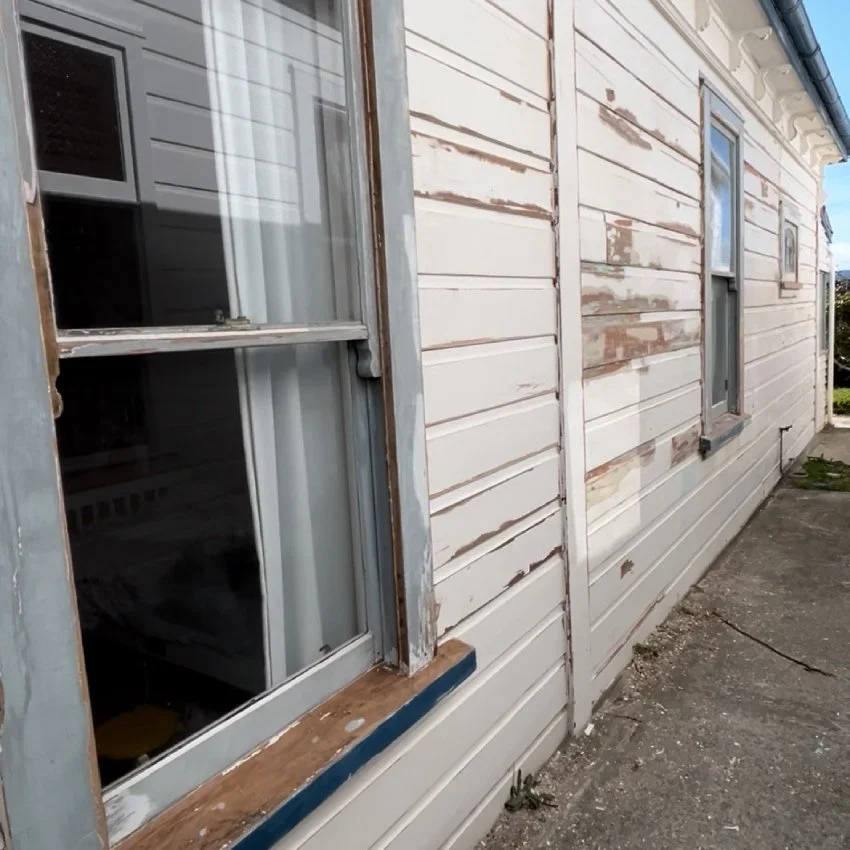
Restoration painting is different from all our other painting services. A standard repaint freshens up a surface that’s still in good shape. Restoration is for surfaces that have been painted over too many times, or have started to fail. Think flaking and peeling paint, cracked coatings, weathered timber and areas of rot. Instead of adding another coat on top of those problems, we take the surface back and rebuild it properly from the start.
It takes longer than a standard repaint, but the results are worth it. Old, failing paint is stripped back and damaged timber is repaired, including two-part resin timber repairs where boards are worth saving rather than replacing. From there, every surface goes through our nine-step process: stripping, oil-based sealing, a full skim fill, orbital sanding, water-based sealing, patch filling, a first top coat, a defect check, and two final top coats. Nothing is rushed, and nothing gets painted over until it’s right.
Restoration suits timber, render and brick, and it’s especially important on older and character homes. Many of those have layers of lead-based paint that need to be tested and handled safely before any work begins. It’s mostly an exterior service, but it can include interior work too, such as restoring ceilings and original features inside older homes. The result is a property brought back to life, with its original character restored and a finish built to last, rather than one that starts letting go again a few years later.
Recent Restoration Painting Projects
-
![Paint stripping]()
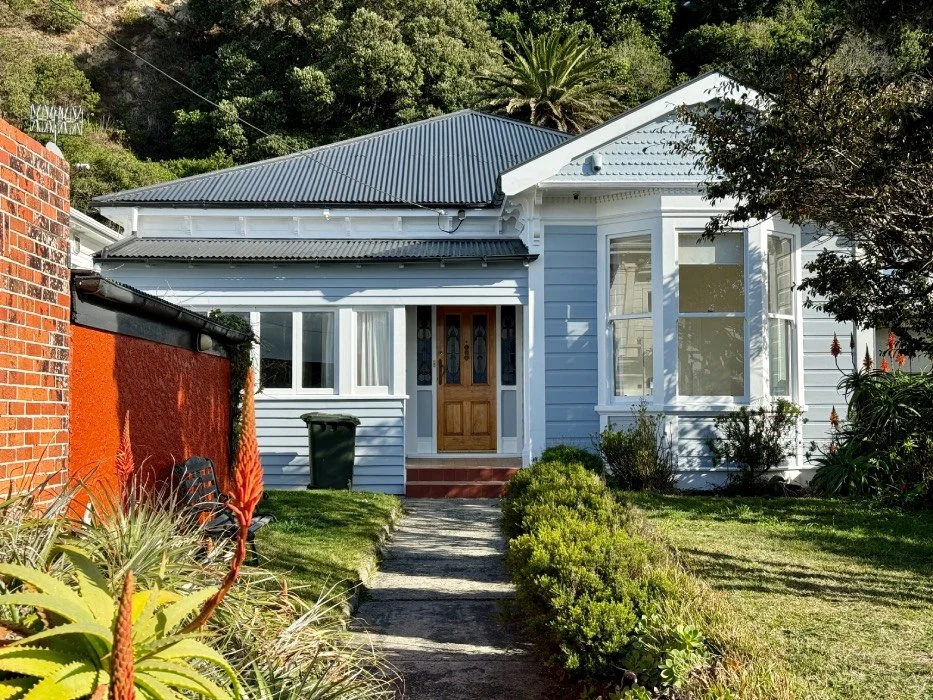
Heritage house painting restoration
-
![Paint Stripping]()
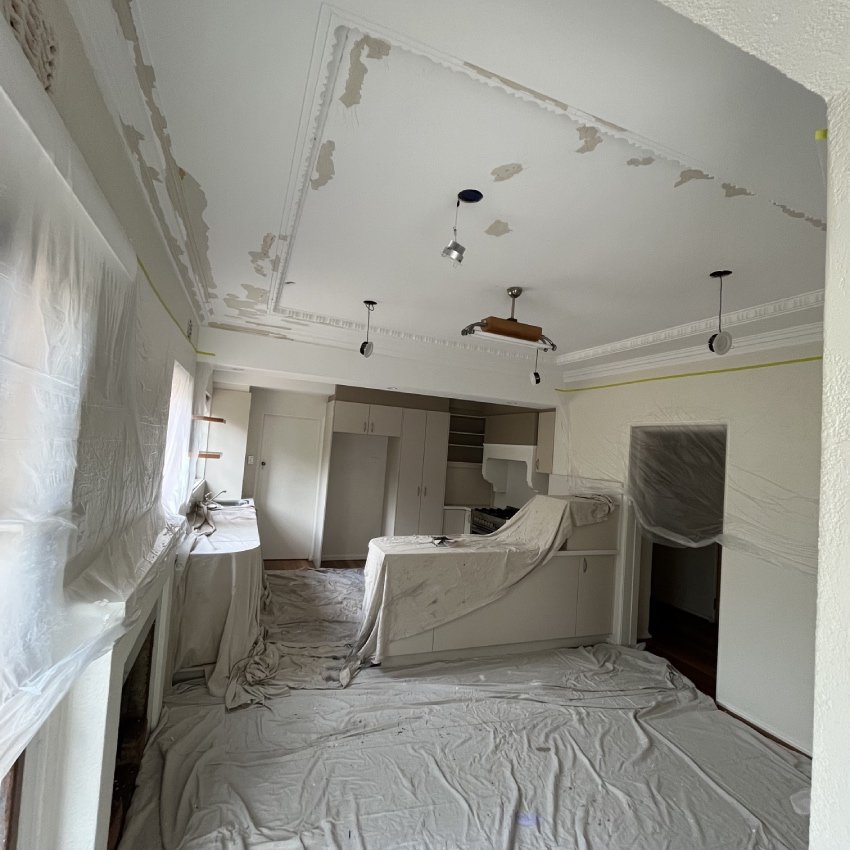
Interior ceiling restoration
-
![Paint Stripping]()
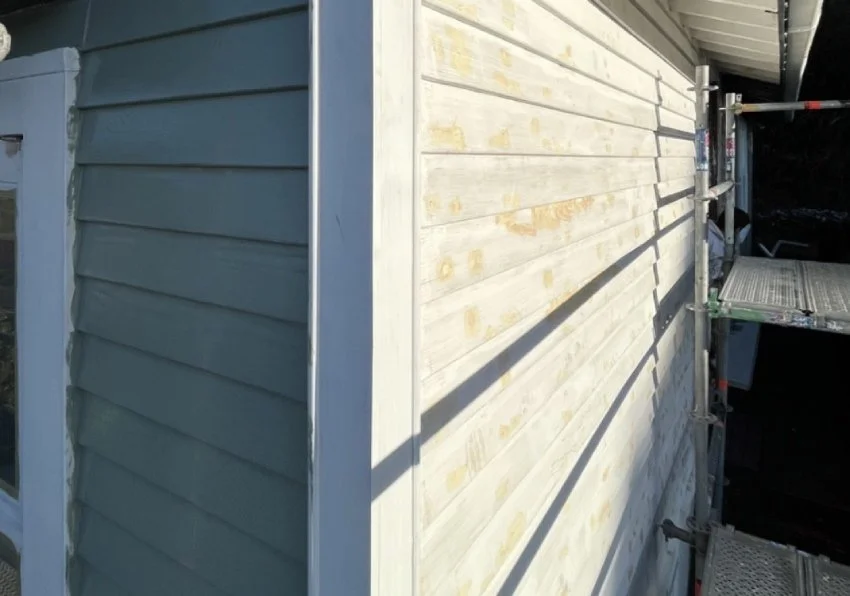
Exterior paint strip & restoration
-
![Paint Stripping]()
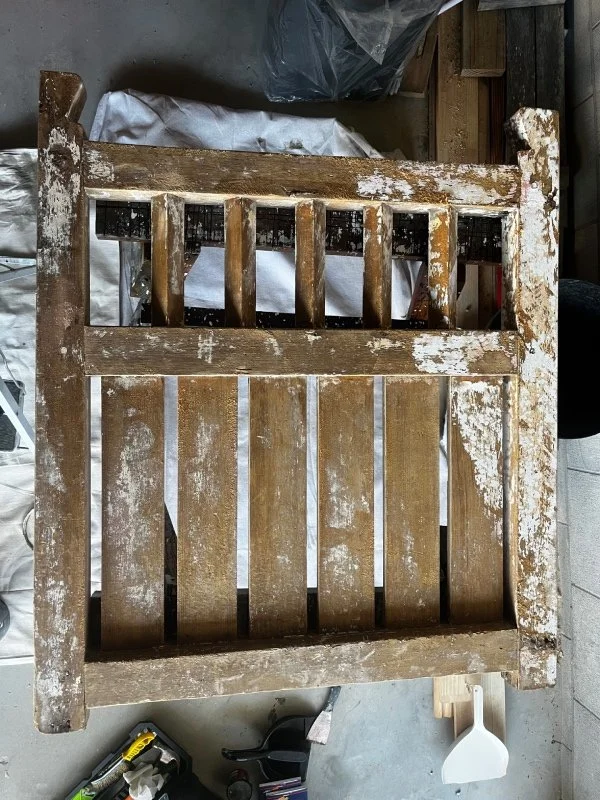
Gate paint restoration

Abdi Khaled
About
I’m Abdi. I spent four years with The Painter Guy in Wellington, where the business has run since 2013, built on high-quality work and a team that genuinely loves what they do. In early 2026 I opened The Painter Guy in Auckland, and we’re growing here the same way: every project follows the same detailed process, with the client at the heart of it — your vision, brought to life with our expertise.
-
During our inspection we will also test for lead paint, as this is commonly found in homes built before the 1980s. If the test is positive we will undertake the proper precautions, and carry out lead paint removal in a safe manner. Ensuring you and the residents of the property are well informed and kept safe at all times. Closely following and adhering by worksafe requirements. The test itself is quick. A spot test on site tells us within minutes whether lead is present in the layers, and where we need more certainty a sample can go away for lab testing. It's worth doing on any pre-1980 home even if you're only planning a recoat, because you cannot tell by looking at it.
The reason it matters is dust. Lead only becomes a problem once it's airborne or lands somewhere it can be picked up, and dry sanding or blasting a lead-painted villa does exactly that. The dust settles into your soil, your garden beds and the inside of your house, and it stays there. Children under six and anyone pregnant are the most at risk. This is one place our stripping method helps. Chemical stripping lifts the coating away in a controlled sheet rather than grinding it into the air, which generates far less dust than sanding the same surface would. It's also why we'd ask you not to take a sander to an old villa yourself. If your home is pre-1980 and you're thinking about prepping it, get it tested first — we're happy to talk you through what you're looking at either way.
-
Our restoration process begins with applying a specific stripper to the surface, which is then covered and left for 24 hours. Following this it is taken off, bringing all previous coats of paint off with it, revealing the pre-existing structure. Allowing us to essentially start from scratch. Doing the proper prep method, and giving it our full 10-year warranty with confidence. It is a common saying in the painting industry: "our coating is only as good as the coating under it".
After bringing the surface back to its original form, the prep work begins. For timber, this includes sanding back and applying an oil-based sealer to lock in the timber and prevent bleeding. After that we grain fill the entire surface, something that most other painters skip, however we do this at every job, leaving you with a perfect factory-like finish. Following that we sand the entire surface again, apply our second sealer coat, apply No More Gaps to all joints, and run defect checks. Once that is all cleared we then apply 2-3 top coats. Depending on what has been agreed and recommended with you in our initial site inspection.
This method of restoration painting allows our paint to stick strongly to each surface, not holding onto old, poorly applied previous coatings. As well as that, between each coat the correct prep is undertaken. Ensuring your property is well protected and looks visually appealing. Our full process can be seen here on our website.
-
Auckland specifically contains many old villas and bungalows, which commonly come under our villa restoration and bungalow restoration portfolio. Due to their age, oftentimes painters continue to stack up paint, one coat after another. However our restoration process strips that all back, bringing your villa or bungalow back to its original state, allowing us to apply prep, primer coats and top coats that will adhere correctly and hold for a long period of time. If your property hasn't had a proper restoration done in some time, it may contain lead paint hidden between coats. That is why it is important for a crew of professional painters to come in and do the job properly and safely.
This method also allows us to retain the history of each building. If you live in an Auckland heritage home, character home, villa or bungalow, our team specialise in heritage and character home painting. With vast experience in restoration, Auckland architectural knowledge and an understanding of the painting system. If your home is in a special character zone or historic heritage overlay, we will work with you, discussing your options regarding restoration and paint selection. To ensure the work on your home is done to a good standard while following code and maintaining your property's rich history.
Auckland Villa Painting and Restoration
Auckland villas commonly contain features such as sash windows, bay windows, balustrades, front verandahs and other various details. Each needing to be treated, prepped and painted in certain ways. Different to other restoration painting projects. That is why it is important to have a team that is experienced in and knowledgeable about Auckland villa painting.
Auckland Bungalow Painting and Restoration
Auckland bungalows typically have deep overhanging eaves, wider weatherboards, casement and fanlight windows, and asymmetrical shingled bays. Again, structurally different, requiring different methods of preparation, priming and painting. When restoring your property it is important to know what you're working with, in order to get a finish that holds and looks good doing it.
-
Restoration painting may take longer than a normal repaint, and will cost more. However it ensures your property is well protected for the next 10 years, freshly applied onto the existing surface with the proper levels of preparation, using the best materials and paints. There is nothing better to bring your property back to life.
It isn't always the right answer, though, and we'd rather say so. If you're selling in a few months, a well-prepared recoat may serve you better than a job that ties the house up for weeks. If the cladding itself is near the end of its life, stripping and coating it is money spent on something that's coming off anyway. And where budget only stretches so far, restoring the elevations that take the weather and recoating the sheltered ones is usually a better use of it than doing the whole house to a lower standard.
Our FAQs below cover how to tell which one your house needs, what each costs and how long they take. If you're still unsure after those, that's what the site visit is for.
-
Restoration painting is different to any other painting service; you need a team of painters that have experience in the field. Painters that are passionate about their craft, and care about each job as if it were their own. That is what we do for each project we take on.
We are proud of where we come from, representing Auckland one painting project at a time. The same high standards that we set in Wellington are now being brought to Auckland. An established business with local Auckland painters, who love what they do.
An important part of any restoration project is ensuring safety precautions are taken. This includes when working with lead paint, working from heights, as well as taking care of character and heritage homes. Ensuring the standard and code are being met and followed. As with all our other services, we care about maintaining a clean, healthy site, not only for ourselves but for you the client. As we understand this is your home.
Finally, our quality of work is second to none. We take pride in every project we choose to take on. Right from our first interaction to our final walkthrough, we will ensure the highest level of work has been undertaken. Leaving you with no concerns, doubts or worries. Keeping constant communication and an open line if there are any queries that come up during or after our project has been completed.
Trusted by Auckland homeowners
-
“Looks fantastic”
Only a few days between tenancies — Abdi came prepared, was professional, and the job was completed on time.
 David Hay
-
“Above and beyond”
On a heritage villa renovation in Grey Lynn — his painting brought the home to life.
IK IKA Carpentry -
“It looked perfect”
Thanks for a great job. Sanded and prepped so well, it looked perfect. Highly recommended.
AM Anella Munro -
“Attention to detail”
The finish looks excellent and everything was left clean. Professional, on time. Would definitely recommend.
 Antony Hunt
From first call to final walk‑through
-
01
Get in touch
Call, text or email — tell us what needs our restoration painting service.
Same‑day reply -
02
Free site visit
We check the surfaces properly and explain our restoration painting process.
Fixed written quote -
03
We do the work
High detailed prep, finished with the best quality paints.
Work our magic -
04
Final inspection
We walk through the final job with you. Nothing left up to doubt.
Workmanship warranty
LET’S TALK
Looking for reliable restoration painters in Auckland?
Tell us about your project and we'll be in touch the same day.
Frequently Asked Questions - Restoration Painters
-
This is a common question. If you have had a restoration service done on your property within the last two paint jobs, and there are no signs of paint failure, blistering, flaking or chalking, then our standard preparation and recoat service will be sufficient. However, if you haven't had a proper restoration service done, know of lead paint existing, have paint failing, or are just after a better, longer-lasting finish, then our restoration service is recommended. The difference between the two services is worth being clear on. A recoat means washing, spot preparation, priming bare patches and applying fresh top coats over a sound existing system. Restoration means removing that system entirely and rebuilding it from the timber up. There are a few checks you can do yourself before we even arrive. Find a spot where the paint has chipped and look at the edge of it. If you can count four, five or more distinct layers, the coating is carrying more weight than it should. Press a strip of masking tape firmly onto a suspect area and pull it off sharply. If paint comes away with it, nothing new is going to bond to what is underneath. Run a dark cloth across a sunny elevation, and if it comes back covered in powder the surface is chalking. Look closely at your mouldings, bargeboards and window surrounds too. On a lot of older villas the detail has softened under decades of paint build-up, and no amount of recoating brings that back. If any of those apply, restoration is the honest answer. If none do, we will tell you that a recoat is all you need rather than selling you the bigger job. Either way we will give you our honest view at the site inspection.
-
Restoration painting will cost more than your average repaint. This is due to the added time spent stripping back all previous coats of paint and running through our nine-step process. Several things move that number. The number of existing coats is the first, because a villa carrying eighty years of paint takes considerably longer to strip than one repainted twice. Decorative detail is the second. Fretwork, finials, bargeboards, corbels and sash windows all have to be stripped and prepared by hand, and a house rich in that detail is where the hours go. If lead paint is present, the containment, safe waste handling and slower methods that come with it also add to the job, and we will set that out separately rather than hiding it in a total. Access is the last factor, particularly on two storey properties where scaffolding goes up before any work begins. Substrate plays a part as well. Stripping a timber weatherboard villa is a different job to preparing render or brick, and many older properties carry both, meaning two systems and two methods. Where a property genuinely sits on the line, we will quote both so you can compare and make the call yourself. The fair way to look at the price is cost per year rather than cost today. A cheap recoat over failing paint may last three or four years before you are paying again, while a proper restoration should carry you for a decade with normal maintenance. However it will save you both hassle and expense in the long run, knowing that with the right maintenance you won't need another painting job done for 10 years, following our guarantee. We break it down in the quote so you can see exactly where the difference sits.
-
Depending on the size of the job, restoration painting can add an extra 2-5 days to each project. This includes the application of paint stripper, letting it do its work for 24 hours, followed by the removal process and the beginning of our nine-step restoration process. In practice we work elevation by elevation rather than stripping the whole house at once, so your property is never left fully exposed while we wait on weather or dry times. That is also why the extra days do not all land in one block. For context, those extra days sit on top of a normal exterior repaint rather than replacing it, so a full villa exterior that would ordinarily run two to three weeks will run longer again. Site setup adds time at the front end too, particularly where lead paint is present and the work area needs proper containment, ground sheeting and a waste collection process before anything is touched. Weather has more influence on restoration than on a standard repaint. Stripper needs to stay active while it works and cannot be applied into heavy rain, and once the surface is back to bare timber it has to be genuinely dry before sealer goes on. In winter that waiting period stretches. Houses heavy in decorative detail take longer again, because fretwork, sash windows and mouldings are stripped and prepared by hand rather than in broad passes. If we find rot, cracked boards or failed sealant once the paint is off, which is common on older properties, we will stop and talk to you about it rather than coating over it. Your quote will carry a realistic duration for your specific property, and we will keep you updated as we go rather than leaving you guessing.
-
The key benefit to having your property restored rather than simply recoated is the longer paint life, better adhesion and protection of your property. A simple recoat, such as a lot of other painters do, will simply fail, due to being applied on pre-existing paints without proper preparation. Two wrongs don't make a right. With restoration you get to start from scratch. There are two benefits people do not think about until they see the result. The first is detail. Decades of paint build-up soften the crisp lines of villa mouldings, weatherboard shadow lines, bargeboards and sash window profiles, and taking it back to bare timber brings that definition back. Owners are often surprised how much sharper the house looks, and that is the timber, not the colour. The second is that stripping exposes what the paint was hiding. Cracked boards, rot at the end grain, failed sealant, rusted fixings and previous patch repairs all become visible while they are still fixable, rather than continuing quietly under a fresh coat. We would far rather find those at the strip stage and talk to you about them than leave them for the next owner. There is also the specification itself. On bare timber we can choose exactly the right sealer and primer for the substrate rather than hoping something bonds to an unknown mix of previous coatings, and that choice is what actually determines how long the finish lasts. It is the reason we can stand behind the work with confidence rather than hedging. There is a resale argument too, because a properly restored villa reads very differently to a buyer, a valuer or a building inspector. And with our experienced painting team you will get a finish that lasts.