
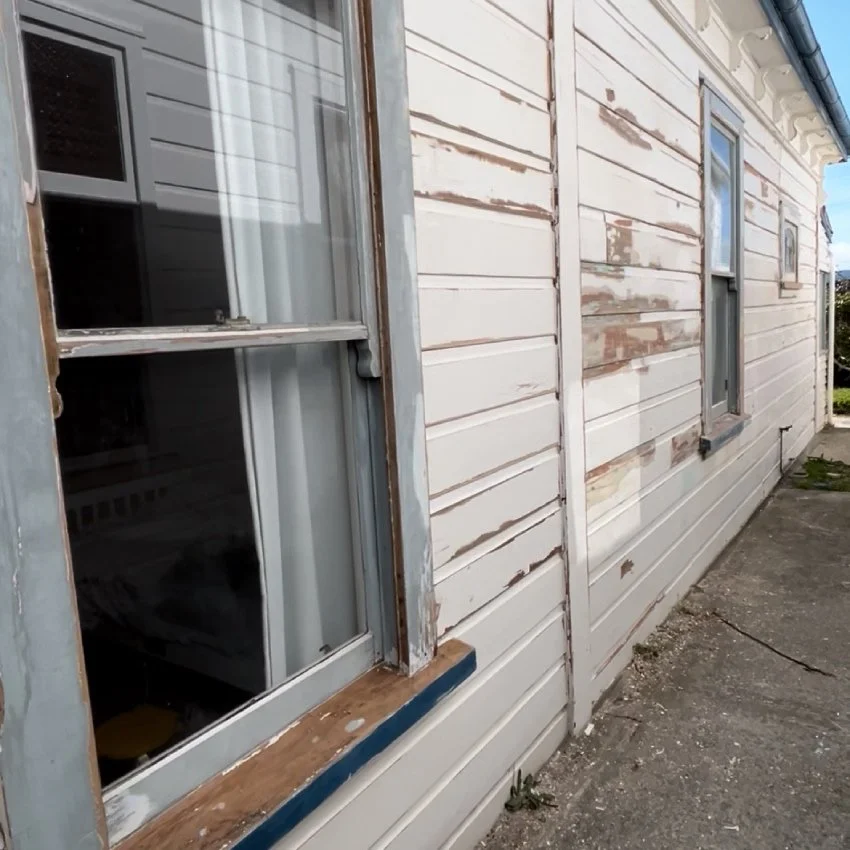
paint stripping auckland
Taking a home back to its original timber — done properly, with lead paint tested and handled the right way.
Not every job needs a full strip, and not every job should settle for less. Patch scraping deals with the areas that have actually failed — loose, cracked or peeling paint — and gets the surface sound enough for a solid repaint. A full strip takes the whole surface back to bare timber, removing every layer that's built up over the years and giving you a genuinely clean start.
A full strip is the best result you can get — it's also the method that takes the longest and costs the most, because there's no shortcut to removing years of paint layers properly. We'll always give you an honest read on which one your home actually needs, not just upsell the bigger job.
Patch scraping vs. a full strip
Patch scraping
Removes paint that's already failed — loose, flaking, or cracked sections — back to a sound edge, then feathers and preps that area so the new coat sits properly. This process includes sanding, contract filling, plastering or repairing and finally priming. Patch scraping is commonly the right call when the paint failure is localised and the rest of the surface is still holding on well.
Full strip
Takes the entire surface back to bare, original timber (or whatever's underneath) — every layer of old paint removed, not just the failed sections. It's essentially starting from new: no old, cracked or unevenly bonded layers left underneath to cause problems again in a year or two. It's the most thorough option, and it's also the one that takes the longest and costs the most, simply because there's no way to do it properly except layer by layer.
Choose patch scraping when: failure is limited to specific areas and the surrounding paint is still sound.
Choose a full strip when: paint has failed broadly, layers have built up over many repaints, or you want a genuinely clean, original surface rather than another coat over old history.
Lead paint testing and our precautions
Homes built before 1965 in New Zealand commonly used lead-based paint, and a large share of Auckland's villas and bungalows fall into that window. Before we scrape, sand, or strip anything on an older home, we test the existing paint for lead so we know exactly what we're dealing with — not assume either way.
If lead is present, it changes how we work, not whether we take the job on. That means containment to stop dust spreading beyond the work area, wet methods where they reduce airborne dust, and proper collection and disposal of paint waste rather than letting it end up loose on site, in the garden, or in the gutters. The goal is straightforward: get the old paint off without putting your family, your pets, or our own team at risk.
Our Full Restoration Process
At The Painter Guy, we believe quality painting starts with quality preparation. That's why we follow a detailed 9-step process designed to deliver a superior finish and long-lasting results — the same standard we bring to every exterior painting and residential painting project, whether it's a full heritage restoration or one of our other painting services.